Need help? Contact a coach for guidance!
Need help? Contact a coach for guidance!

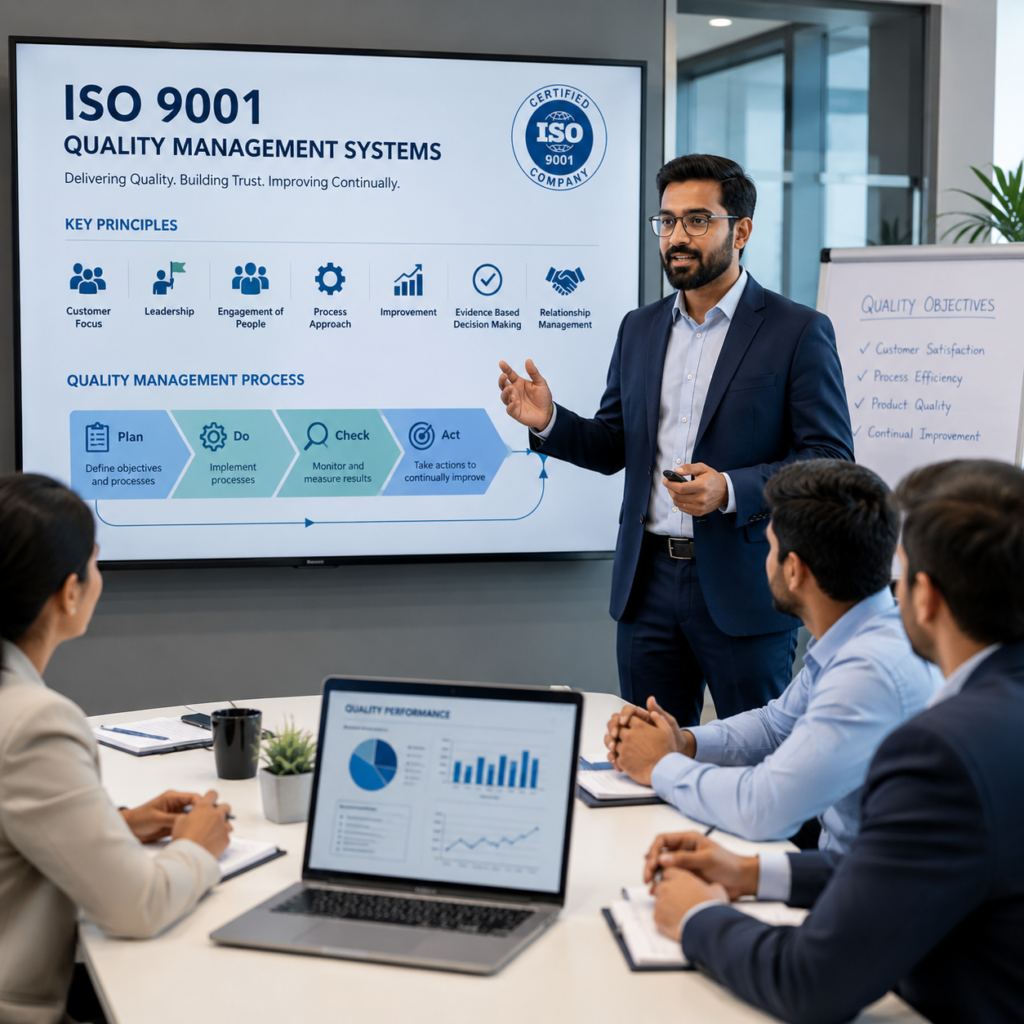
ISO 9001 training focuses on the Quality Management System (QMS), helping individuals and organizations consistently meet customer and regulatory requirements.
Introduction to ISO 9001 Training· ISO 9001 is a globally recognized quality management system (QMS) standard that enables organizations to improve customer satisfaction by meeting requirements and continually enhancing their quality processes.·
ISO 9001 training helps individuals and organizations understand, interpret, and apply the requirements of the standard to build an effective and compliant QMS.·
It explains the principles, concepts, and best practices of quality management systems and how they support improved performance, operational efficiency, and organizational effectiveness.·
ISO 9001 training is ideal for quality professionals, internal auditors, process owners, team leaders, supervisors, management representatives, and anyone looking to develop a strong foundation in quality management.
Courses are typically categorized by the level of expertise required:
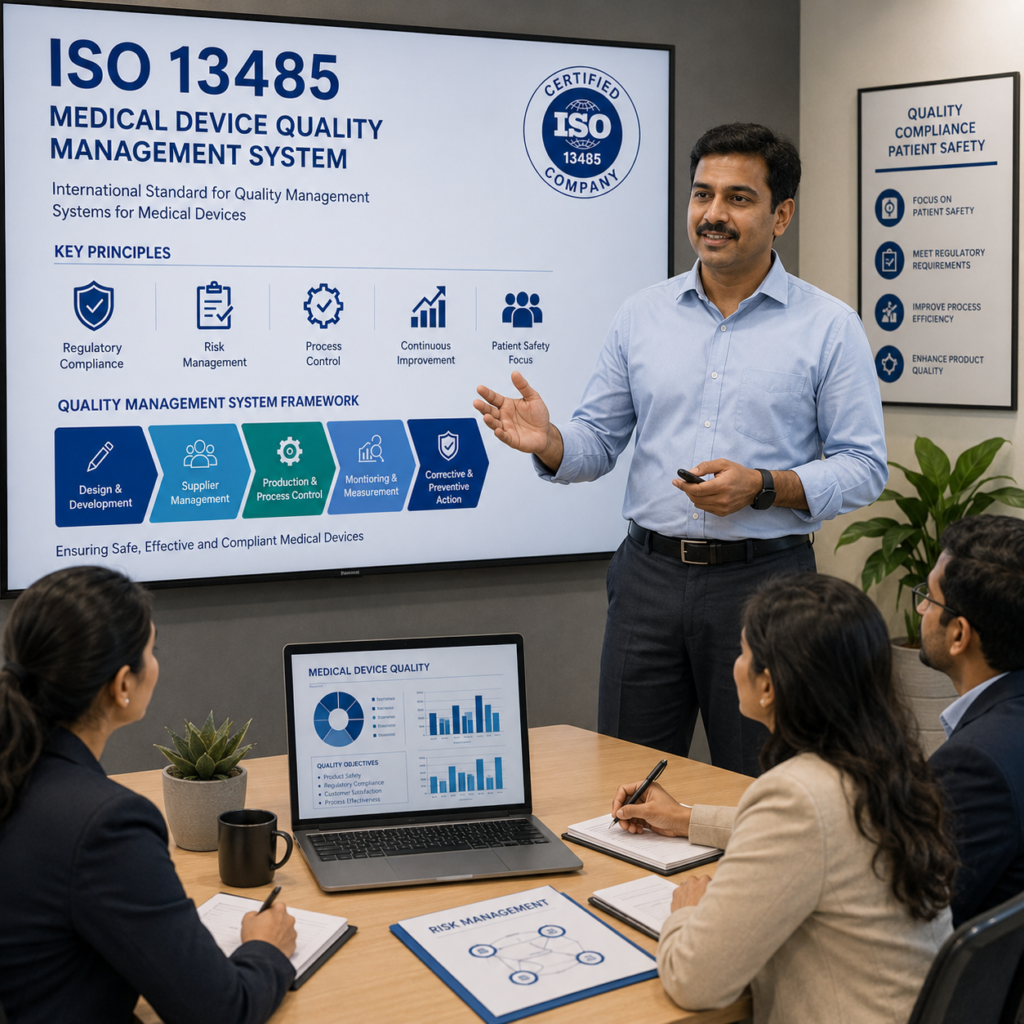
ISO 13485 is the establishment of a Quality Management System (QMS) specifically tailored to ensure the safety and efficacy of medical devices throughout their entire lifecycle. While it is based on the ISO 9001 process model, it prioritizes regulatory compliance and risk management over subjective customer satisfaction or continuous improvement.
Introduction to ISO 13485 Training·
Understand the purpose of a medical device quality management system (MD-QMS), interaction with appropriate medical device regulatory authority requirements, quality management systems standards, third-party certification, and the business benefits of the quality management system.·
Understand the role and responsibilities of an auditor to plan, conduct, report, and follow-up a quality management system audit in accordance with ISO 19011 and ISO/IEC 17021·
Learn to plan, conduct, report, and follow-up an audit of a medical device quality management system to establish conformity (or otherwise) with ISO 13485 and applicable medical device regulatory requirement documents in accordance with ISO 19011, ISO/IEC 17021.
Training is typically categorized into four main paths based on professional goals:
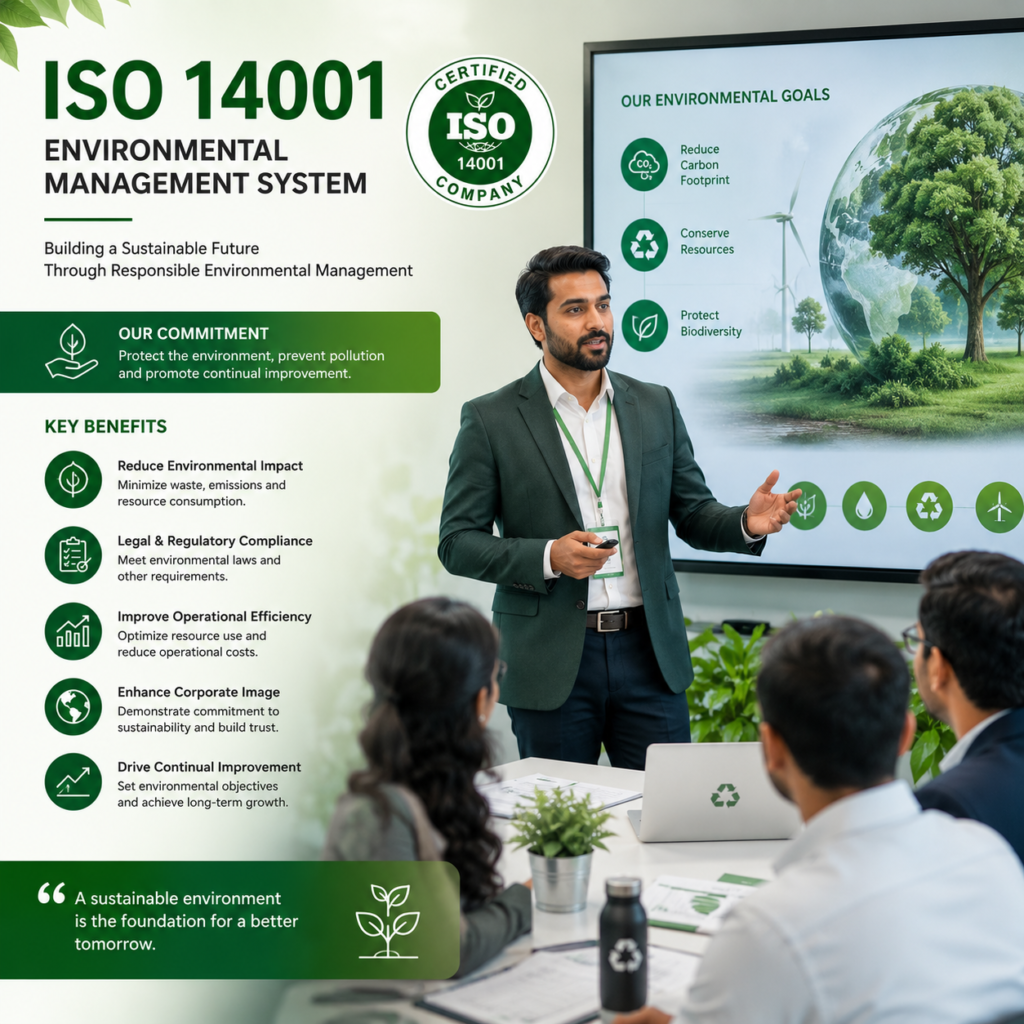
ISO 14001 training is designed to help individuals and organisations understand and implement an Environmental Management System (EMS). Training is typically divided into specific levels based on your role, ranging from basic awareness to professional auditing Introduction to ISO 14001 Training·
ISO 14001 is a globally recognized environmental management system (EMS) standard that helps organizations manage environmental responsibilities, meet regulatory requirements, and improve environmental performance.·
ISO 14001 training enables individuals and organizations to understand, interpret, and apply the requirements of the standard to build an effective and compliant EMS.·
It explains the principles, concepts, and best practices of environmental management and how they support pollution prevention, resource efficiency, and continual improvement.
ISO 14001 training is ideal for environmental professionals, internal auditors, process owners, supervisors, sustainability teams, and anyone looking to build a strong foundation in environmental management.
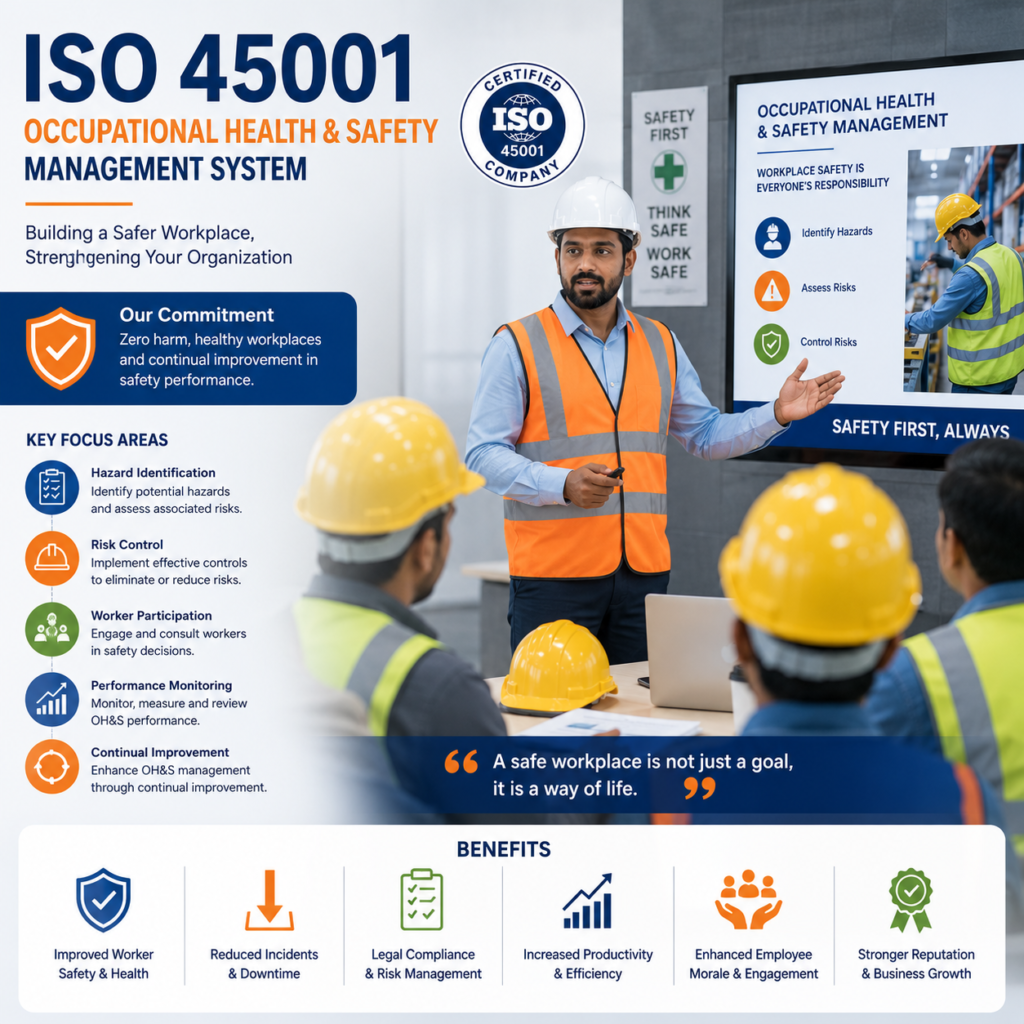
ISO 45001 training is designed to help individuals and organisations establish, implement, and audit an Occupational Health and Safety Management System (OHSMS). This standard focuses on reducing workplace injuries and improving employee well-being.
Introduction to ISO 45001 Training·
ISO 45001 is a globally recognized occupational health and safety management system (OHSMS) standard that helps organizations create safer workplaces, reduce risks, and prevent work-related injuries and ill-health.·
ISO 45001 training enables individuals and organizations to understand, interpret, and apply the requirements of the standard to build an effective and compliant OHSMS.·
It explains the principles, concepts, and best practices of occupational health and safety management and how they support hazard control, legal compliance, and continual improvement.·
ISO 45001 training is ideal for safety professionals, internal auditors, supervisors, HR teams, process owners, and anyone looking to build a strong foundation in occupational health and safety.
Courses are typically categorised by the level of responsibility an individual has within the OHSMS:
Lead Implementer: A 5-day course focused on the practical steps needed to build and run a safety system from scratch using the Plan-Do-Check-Act (PDCA) cycle.
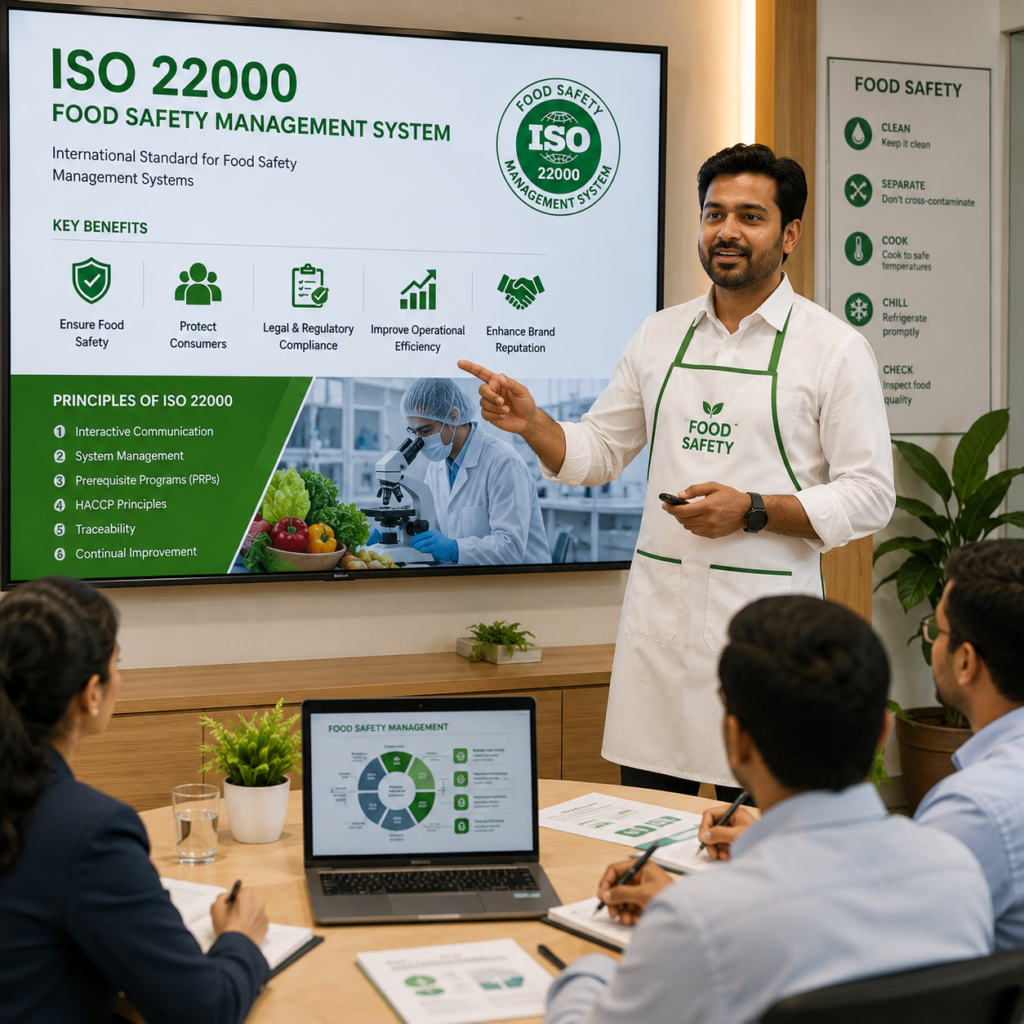
ISO 22000 training is designed for professionals in the food supply chain—including manufacturing, processing, and catering—to master the Food Safety Management System (FSMS). This standard uniquely integrates the HACCP (Hazard Analysis and Critical Control Point) principles with managerial oversight to ensure global food safety.
Key Topics Covered·
HACCP & CODEX Principles: The foundation of hazard analysis and critical control measures.·
Prerequisite Programmes (PRPs): Fundamental hygiene and facility controls like pest management and equipment maintenance.·
PDCA Cycle: Using the "Plan-Do-Check-Act" model for continuous system improvement.·
Traceability & Recall: Procedures to track products from raw material to consumption and manage withdrawals if necessary.
Courses are structured based on an individual’s role in the food safety chain:
© 2026 Copyright Sanctio | Developed by Kaarasun